At the Battle of Gettysburg, there were many instances of bravery. There was even one example of courage when a Union regiment was ordered to surrender for the good of the army. This act of bravery was performed by the 16th Maine.
The Battle of Gettysburg started off in the morning of July 1, 1863 when Confederate forces soldiers at McPherson’s Ridge. As the day wore on, soldiers from both sides arrived to take part in the battle. One Confederate division led by General Robert Rhodes looked to attack Union forces further to the right of McPherson’s Ridge at a place known as Oak Ridge.
Rhodes had four brigades. He was fighting against brigades led by Union General Lysander Cutler and a division led by General John Robinson. Confederates Colonel Edward O’Neal and General Alfred Iverson led the first of Rhodes attacks and were unsuccessful, with each brigade suffering heavy casualties. Union General Henry Baxter of Robinson’s division had his soldiers hidden behind a stone wall and shattered Rhodes’ brigades.
General Junius Daniel and General Stephen Dodson Ramseur led the other two brigades of Rhodes’ division. Daniel added the remnants of Iverson’s and O’Neal’s brigades to his own and with Ramseur’s forces the Confederate force was massive.
General Baxter’s soldiers were exhausted and out of ammunition after the first two assaults and were transferred out of the Union defense. Cutler’s soldiers were also moved out. That left a brigade led by General Gabriel Paul to fight the huge onslaught. Paul’s men fought bravely, but they were badly outnumbered. Robinson knew to save his division he had to retreat, but he would need time to get his soldiers back to a place where they could regroup.
General Robinson went to Colonel Charles Tilden of the 16th Maine Regiment. The regiment contained only 275 soldiers and officers. Robinson told Tilden that he was going to have to stay behind and hold the position to the last man while he could get the other soldiers out of the area. Tilden’s soldiers knew that their regiment was to be sacrificed for the good of the retreating soldiers.
Tilden’s soldiers put up a good fight, gave way a little and then fired at the massive enemy force again. They gave 20 minutes of time to help Robinson’s soldiers escape. As the situation became hopeless, the regiment pulled back to a railroad cut.
Tilden knew that it was time to surrender to the enemy, and when a colonel surrenders, he is to give up his sword. In a brave act of defiance, Tilden drove his sword into the ground and then broke off the top section. The sword was useless. The soldiers in the regiment were supposed to hand over their battle flag on surrendering. Taking the lead from their commander, the soldiers of the 16th Maine tore up their flag rather than to give it to the Confederates. They ripped it into little pieces, and each soldier took a little piece of the flag and hid it inside their shirt. At this point, the regiment surrendered to Daniel’s soldiers. The soldiers held on to the pieces of their flag as their way of honoring their country.
Of the 275 members of the 16th Maine only 38 were able to escape. 159 of them surrendered, and the rest were either killed or wounded.
Lee took the prisoners back to Virginia after losing the Battle of Gettysburg and put them in a military prison. Colonel Tilden managed to escape and head back north to rejoin the Union Army. In another battle, he was captured again, but Tilden also escaped from the second prison.
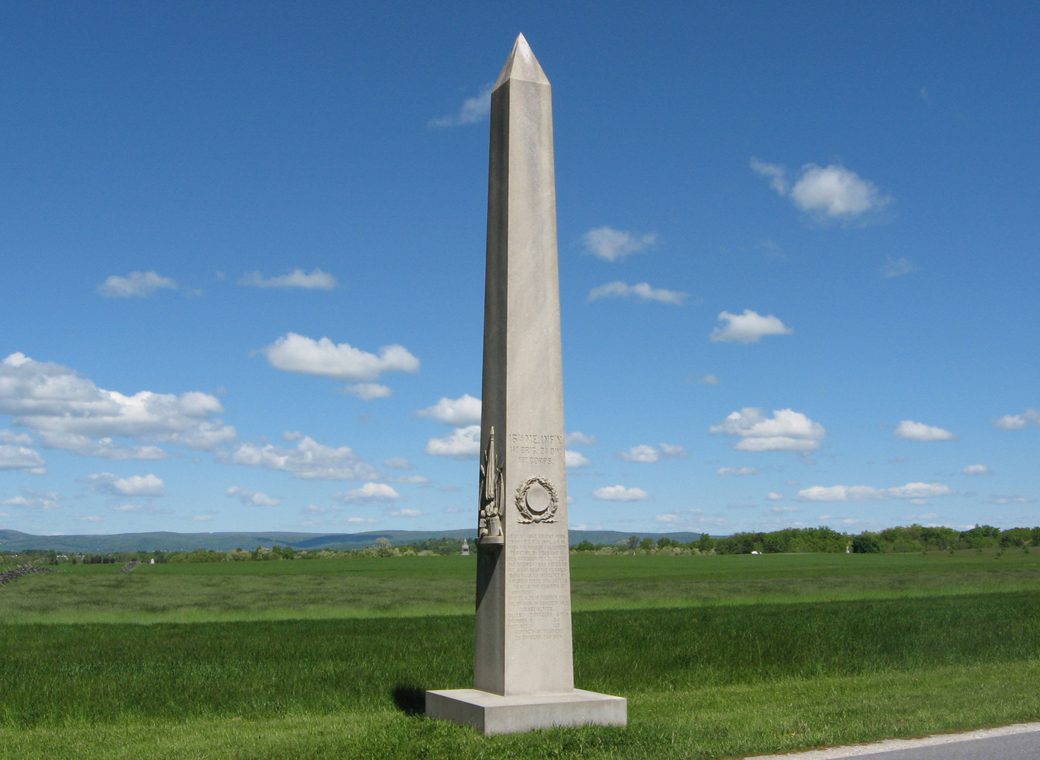
If you go to the Gettysburg Battlefield, one of your stops should be at the Eternal Light Peace Memorial. As you leave the monument, you’ll be on North Confederate Avenue. Stay on the road past Mummasburg Road, and it turns into Doubleday Avenue. You’ll see the Oak Ridge Observation Tower. Go past it, and you will be at the part of Oak Ridge where the 16th Maine fought. Look down the road, and there will be the railroad cut where the regiment surrendered.
The soldiers of the 16th Maine fought hard on that first day of the battle, and proved that in surrendering you can still honor your country.

 Latest Release



0 Comments